
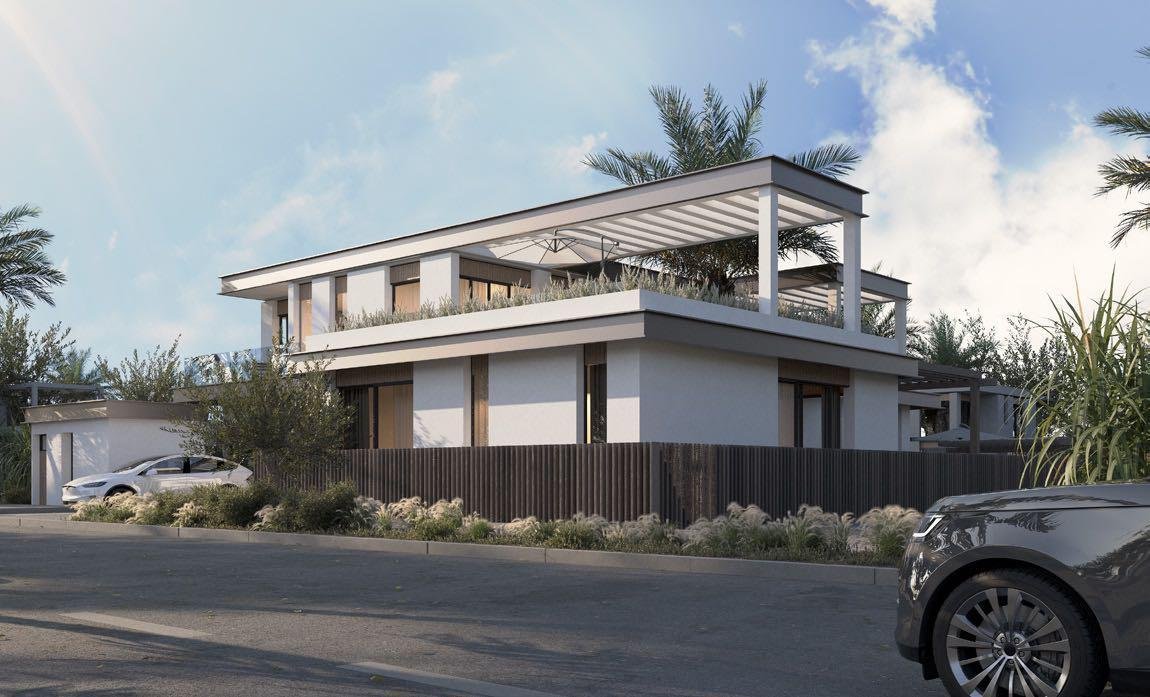
Market Signals & Demand Dynamics: What Hudayriyat Island and Al Naseem Reveal About Abu Dhabi’s Next Phase
Abu Dhabi’s residential property market is often described as “still maturing” when compared with Dubai’s highly liquid, transaction-heavy environment. This characterisation is broadly accurate. Dubai benefits from decades of international branding, deep secondary liquidity, and a fast-moving investor base. Abu Dhabi, by contrast, has historically prioritised stability, end-user demand, and controlled supply.
However, maturing does not mean inactive. On the contrary, recent on-the-ground signals-particularly around Hudayriyat Island and the Al Naseem villa community-suggest that informed buyers are already positioning themselves ahead of what they perceive to be a structural inflection point in Abu Dhabi’s market.
These signals are not coming from headline transaction volumes alone, but from behavioural indicators: speed of sell-outs, nature of buyer demand, peer-to-peer investor discussion, and early resale dynamics. When analysed together, they paint a picture of a market attracting a different type of buyer-one focused less on short-term churn and more on long-term value, lifestyle utility, and downside protection.
1. Speed of Absorption: What Rapid Sell-Outs Signal
One of the clearest early indicators of demand strength is absorption velocity-how quickly inventory is taken up once released. In the case of Hudayriyat Island, multiple community discussions and investor forums indicate that off-plan residential projects sold out within days of launch, rather than weeks or months.
This matters for several reasons.
First, rapid sell-outs in a controlled-supply market suggest pent-up demand rather than speculative hype. Abu Dhabi does not typically release land or residential inventory in large, frequent waves. When plots are absorbed quickly, it often reflects buyers who have been waiting for a specific combination of location, master planning, and pricing-rather than opportunistic flippers reacting to marketing momentum.
Second, early resale premiums reported by some initial buyers-again referenced through peer-to-peer commentary rather than formal sales reports-indicate that pricing at launch may have been deliberately conservative. This is consistent with Abu Dhabi’s historical approach, where developers and authorities tend to prioritise sustainable uptake over aggressive pricing escalation.
For individual investors, this dynamic is important. Early phases that sell quickly at rational pricing often set a healthier long-term pricing curve than projects that struggle to gain traction and rely on incentives to move stock.
2. Value per Square Metre: A Structural, Not Cyclical, Gap
Another recurring theme in investor and homeowner discussions is the price-to-space differential between Abu Dhabi and Dubai-particularly in villa communities.
Hudayriyat Island, and Al Naseem specifically, is frequently cited as offering:
- Larger plot sizes
- Lower density
- Beachside or island living
at price points that can be 20–30% lower per square metre than comparable villa communities in prime Dubai locations.
This is not a temporary discount driven by weak demand. It is largely structural.
Dubai’s prime villa communities-such as Palm Jumeirah, Emirates Hills, or Jumeirah Bay-are constrained by land scarcity, legacy pricing, and global brand premiums. Abu Dhabi, by contrast, still has the ability to introduce new prime districts under unified master plans, with modern infrastructure and coherent urban design.
For long-term investors and end-users, this price-to-space gap is significant. It means:
- More liveable space per unit of capital
- Larger plots that better suit family living
- Lower density environments that age more gracefully over time
Crucially, this value proposition tends to attract buyers who are less sensitive to short-term price movements and more focused on utility and longevity. Markets dominated by such buyers often experience lower volatility and more stable resale behaviour.
3. Buyer Profile Matters More Than Volume
One of the most telling signals around Al Naseem is not just how fast units are selling, but who they are designed for.
Specialist agents and market observers consistently describe Al Naseem villas as being tailored toward:
- End-users
- Families
- Long-term residents
rather than short-term investors or yield-driven landlords.
This distinction is critical.
High-turnover markets dominated by speculative investors often exhibit sharp price swings. When sentiment shifts, supply floods the secondary market. By contrast, communities built for families-larger villas, generous layouts, outdoor space, proximity to schools and leisure infrastructure-tend to see longer holding periods.
Longer holding periods reduce forced selling, which in turn supports:
- More orderly price discovery
- Healthier resale negotiations
- Greater resilience during broader market slowdowns
In practical terms, a market with fewer distressed or impatient sellers is more likely to preserve value through economic cycles. This is especially relevant for individual investors who prioritise capital preservation alongside upside.
4. Peer-to-Peer Discourse as an Early Indicator
While Reddit and online forums are not formal data sources, they serve an important role as early sentiment indicators, particularly among informed retail investors and expatriate end-users.
Repeated themes across Hudayriyat-related discussions include:
- Comparisons of space and pricing versus Dubai
- Commentary on build quality and master planning
- Interest from buyers relocating families rather than flipping units
- Observations that supply feels “finite” relative to demand
What is notable is the consistency of these themes across independent conversations. In property markets, repeated peer-to-peer narratives often precede broader institutional interest. They represent the earliest stage of market consensus forming-before transaction statistics fully reflect the shift.
For investors willing to look beyond headline numbers, such discourse can provide valuable context about how a market is actually being used, not just how it is being traded.
5. Stability Over Spectacle: Abu Dhabi’s Different Growth Curve
Dubai’s success has been built on spectacle, speed, and global liquidity. Abu Dhabi’s growth curve is different. It emphasises:
- Controlled supply
- End-user demand
- Government-led master planning
- Lifestyle infrastructure integrated with residential development
Hudayriyat Island exemplifies this approach. The island is not being positioned as a speculative hotspot, but as a long-term lifestyle district incorporating sport, wellness, beachfront living, and low-density residential communities.
For Al Naseem specifically, this positioning suggests a market where price growth is more likely to be:
- Gradual rather than explosive
- Supported by real usage rather than turnover
- Less exposed to sudden corrections
For individual investors-particularly those relocating from the UK or Europe-this profile may be preferable to faster but more volatile markets.
6. What These Signals Mean for Investors
Taken together, the market signals around Hudayriyat and Al Naseem suggest the following:
- Demand is real, not manufactured, evidenced by rapid early sell-outs.
- Value is structural, driven by space, planning, and pricing differentials versus Dubai.
- Buyer composition favours stability, with an emphasis on families and end-users.
- Resale behaviour is likely to be healthier, due to longer holding periods.
- Upside potential exists, but is tied to long-term maturation rather than short-term spikes.
This does not mean Abu Dhabi will “outperform” Dubai in headline terms. It means it may offer a different kind of performance-one aligned with investors who value resilience, liveability, and measured growth.
Closing Perspective
Markets often reveal their future direction quietly, through small but consistent signals, before the data becomes obvious to everyone. Hudayriyat Island and the Al Naseem community are generating precisely these kinds of signals.
For individual investors willing to prioritise fundamentals over hype, Abu Dhabi’s current phase may represent not a lag behind Dubai-but an earlier chapter in a different story altogether.