
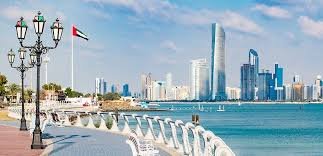
For UK and European investors, quality of life has become inseparable from long-term financial decision-making. Increasingly, individuals are not just asking where returns are available, but where capital can remain safely deployed while supporting family life, personal security, and long-term residency.
This shift is occurring against a backdrop of meaningful wealth migration out of Europe. The UK, in particular, is undergoing one of the most significant private-capital relocations in recent history. Multiple international wealth migration studies estimate that between 9,000 and 16,000 UK millionaires are leaving the country annually, driven by a combination of tax reform (including changes to the non-dom regime), cost of living pressures, and lifestyle considerations. The UAE has consistently ranked among the top destination countries for these outbound flows, alongside Switzerland, Italy, and Singapore.
Quality of life is a central factor in this movement. Abu Dhabi consistently ranks among the safest cities globally, with crime rates materially lower than those of London, Paris, or other major European capitals. For UK and European families, this level of safety is not abstract-it directly affects daily confidence, family mobility, and the willingness to establish a long-term base rather than a temporary residence.
Urban planning further reinforces this appeal. Abu Dhabi’s growth has been characterised by master-planned districts such as Saadiyat Island, Yas Island, and Reem Island, where residential developments are delivered alongside schools, healthcare, cultural institutions, and transport infrastructure. This planning discipline mirrors the long-term urban strategies seen in Europe’s most liveable cities and contrasts with more reactive growth models elsewhere.
Cultural infrastructure also matters to European investors. The presence of institutions such as Louvre Abu Dhabi and an expanding arts and public-space ecosystem signals a city investing in cultural capital, not merely real estate. For many UK and European families, this contributes to a sense of familiarity and permanence that supports long-term settlement decisions.
Quality of life also has direct investment implications. Properties in cities that offer safety, efficient services, and cohesive planning tend to be held for longer periods, reducing turnover risk and aligning real estate ownership with lifestyle use rather than speculation.
For UK and European investors increasingly focused on capital preservation, continuity, and optionality, Abu Dhabi’s quality-of-life profile has become a structural driver of long-term confidence, not a secondary consideration.